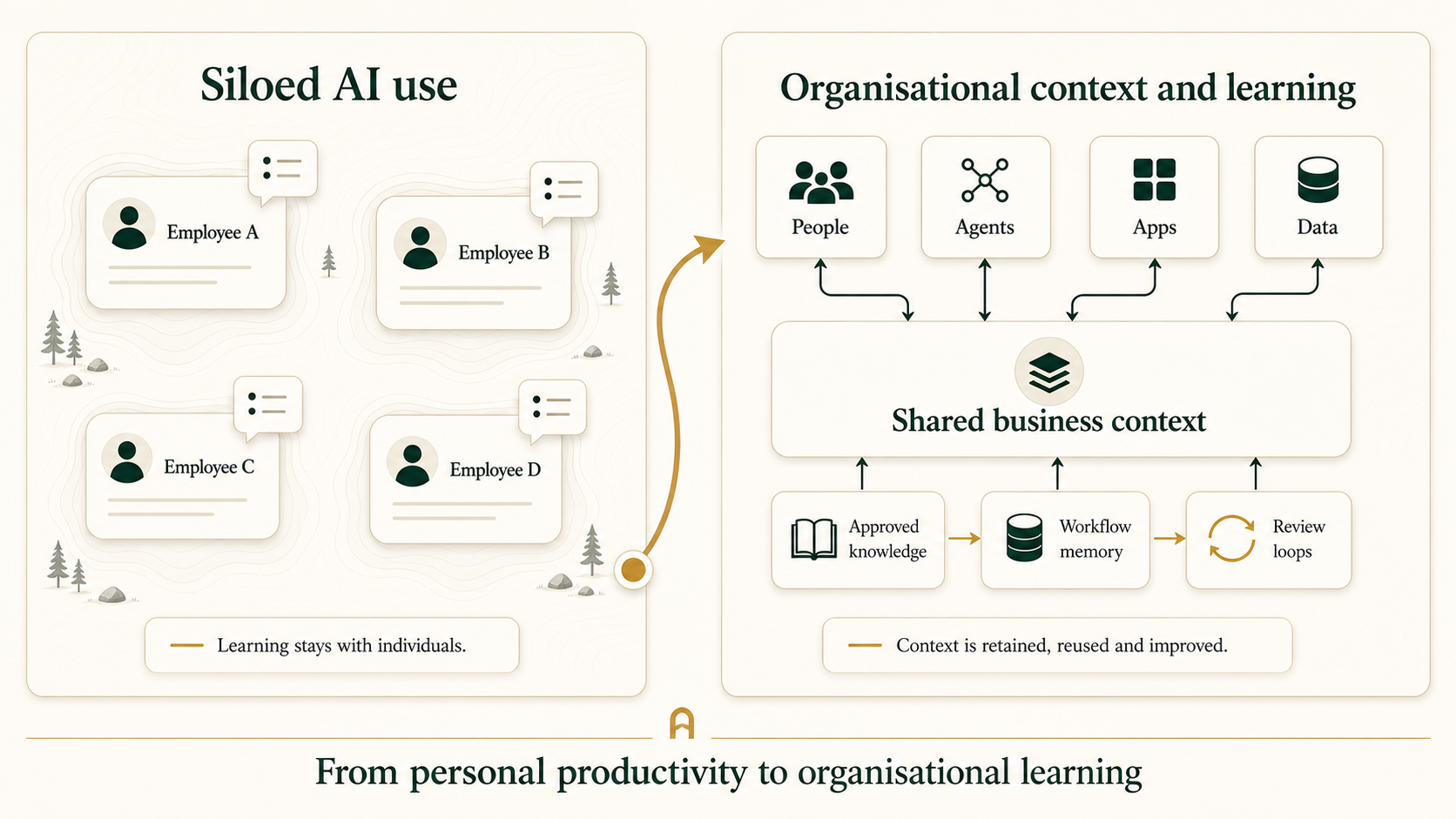
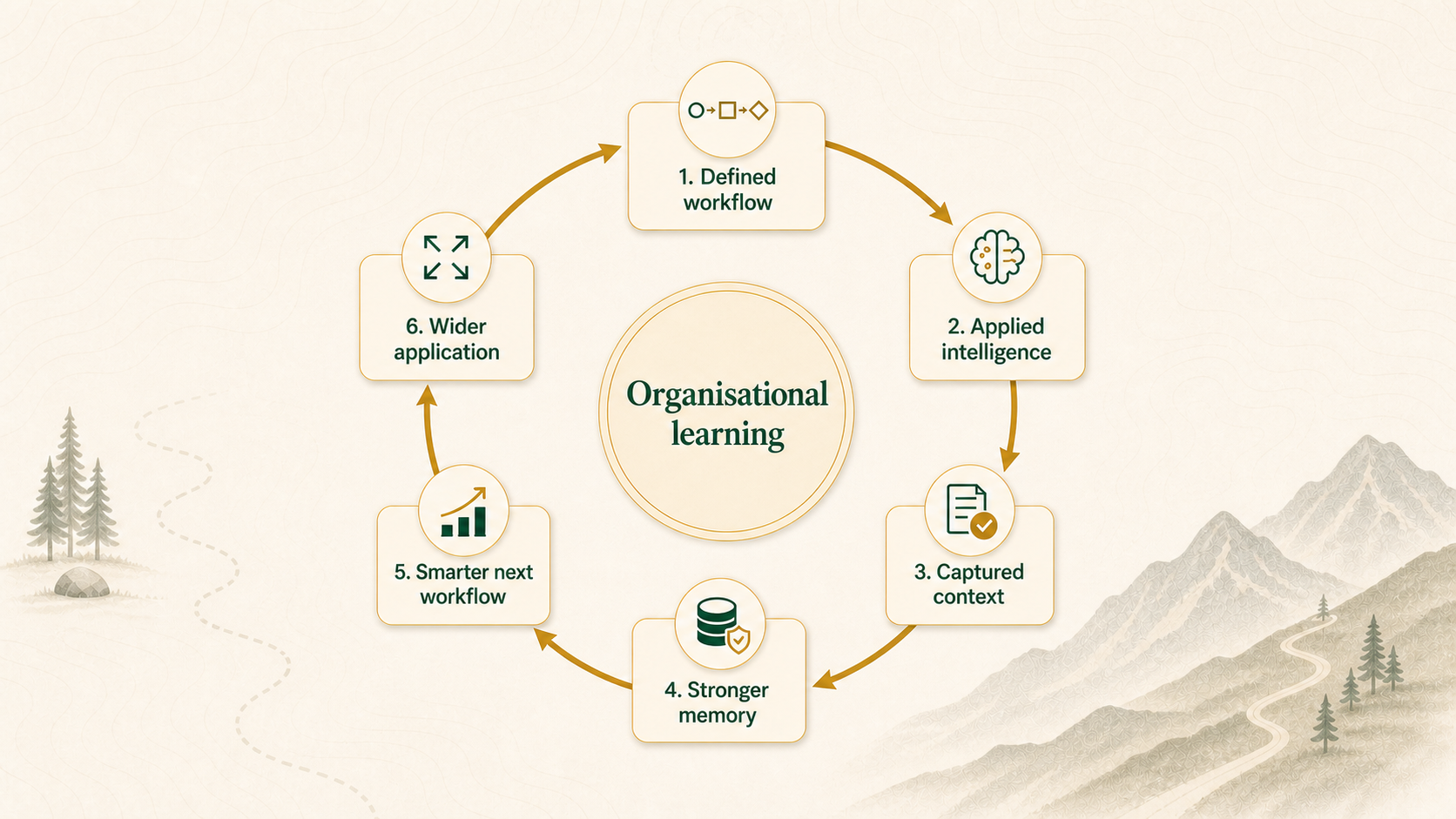
For AI to improve the business, not just individual tasks, it needs to be connected to how the business actually works.
That means more than buying another tool or giving everyone a login. It means defining where AI should support real workflows, what information it can use, what must remain protected, who reviews the output, how decisions are recorded, and how learning improves over time.
The goal is not to remove people from the work. The goal is to help people work with better context, cleaner follow-through and stronger control.
In practice, that can mean turning call notes into follow-up actions. It can mean preparing a first draft of a proposal from an approved template and source material. It can mean surfacing open project risks before a status meeting. It can mean turning repeated document work into a governed process rather than a blank-page exercise each time.
The common thread is that the work is defined, the inputs are approved, and the output is reviewed.
AI becomes more valuable when it is attached to real workflows: the right source material, the right permissions, a clear review step and a visible business result.